

Filler Fear Is Real — and Honestly, It’s Not Misplaced

Scroll through social media and you’ll see why people are wary of dermal fillers: overfilled cheeks, disproportionate lips, and faces that don’t move naturally. It’s understandable why filler fear is real.
But here’s the truth: the problem isn’t the filler. It’s how the filler is done.
Treatments are rushed, improvised, or performed without understanding how one change affects the balance of the whole face. In the wrong hands, even a great product can create poor results.
The Illusion of Ease

Because filler injections are minimally invasive with little to no downtime, they’re often perceived as simple procedures. That perception couldn’t be further from the truth.
There’s a widespread misconception that anyone with a syringe can deliver great filler results. Lasting, natural-looking outcomes require far more than injection where volume loss appears, which often leads to puffiness or an overfilled look.
The reality is that successful filler treatment is highly nuanced. Every injection involves critical decisions (depth, product selection, volume placement, and timing); each of which affects both safety and long-term results.
Why Fillers Get a Bad Rap
The problem isn’t the product; it is how it’s used. Most filler treatments focus on adding volume rather than creating structure. That’s why results often look puffy, uneven, or disconnected. Here are four of the biggest reasons filler has earned an undeserved bad reputation.
1. Treatment Without a Plan
At many med spas, filler is treated like a menu item: a little in the lips, a touch under the eyes, maybe the cheeks if there’s time. There is no cohesive vision for how all those areas should connect.
Common pitfalls include:
- 8 to 10 patients treated in the time our team typically sees one.
- New injectors practicing on real patients’ faces.
- No master plan for harmony, just “a little here, a little there.”
- Patients bouncing from injector to injector with no continuity or records.
Imagine building a home one wall at a time, each with a different contractor, none sharing the same blueprint.
Great results don’t start with a syringe, they start with a design.
2. Filling Instead of Building
The way many providers use filler today is simply wrong. Even the word “filler” suggests something meant to be injected into the skin to inflate or stuff like a pillow.
We should not be filling faces; we should be adding structure and support.
Hyaluronic acid injectables were never meant to inflate, stuff, or chase wrinkles one line at a time. That approach ignores the face as a three-dimensional structure. When used correctly, these injectables serve as tools designed to restore support, rebalance proportions, and reshape how light moves across the face.
Too often, syringes are emptied into isolated areas—under the eyes, into the folds, or whatever area a patient points to—without addressing the true cause of imbalance or the aging face. When filler is placed without an understanding of anatomy, proportion, and light, it distorts instead of enhancing.
But when treatment is planned with structure in mind, it doesn’t just fill space, it reimagines form. This architectural approach treats the face as a three-dimensional living structure, not a flat canvas.
Injectable artistry is guided by anatomy to rebuild the foundation under the eyes, sculpt and lift at the cheekbones, and refine proportion along the jawline, millimeter by millimeter.
3. Treating Filler Like a Spa Appointment
When hyaluronic acid fillers were first introduced in 2001, they were used (like their predecessor, collagen) to soften fine lines, nasolabial folds, and occasionally enhance the lips.
Over time, hyaluronic acid filler usage evolved into a far more powerful and versatile tool than collagen. Rather than simply softening lines, HA filler made it possible to contour, support, and shape the face across multiple facial regions.
What once required hours in an operating room and months of recovery can now be achieved in the office with minimal downtime, minimal risk, and even reversibility.
However, placing filler isn’t a spa treatment; it’s a medical procedure that demands precision and respect for anatomy. Most hyaluronic acid fillers last far longer than once believed, and are semi-permanent enhancements that shape how light and shadow live on your face for years.
Thoughtful planning, standardized imaging, and structured follow-up are what separate artistry from improvisation.
4. An Industry Focus on Volume, Not Vision

Here’s the truth few want to say out loud: fillers have been marketed as a numbers game. More injectors, more syringes, more often.
When treatment becomes transactional, artistry and planning take a back seat. The result is what we see far too often: faces that look “done” instead of natural.
But with anatomical insight and strategic design, more can often be achieved with less. More planning and less product lead to better long-term results.
Myths vs. Facts About Fillers
| Myth | Fact |
|---|---|
| Pillow face is inevitable. | Over-filling is avoidable when treatment is guided by restraint and precision. |
| Fillers migrate everywhere. | True migration is rare; what most people notice is swelling or poor placement. |
| You can’t safely treat delicate areas like the under eyes. | With advanced technique and anatomical expertise, you absolutely can. |
The Real Potential of Fillers
Subtle, millimeter-level changes can be transformative:
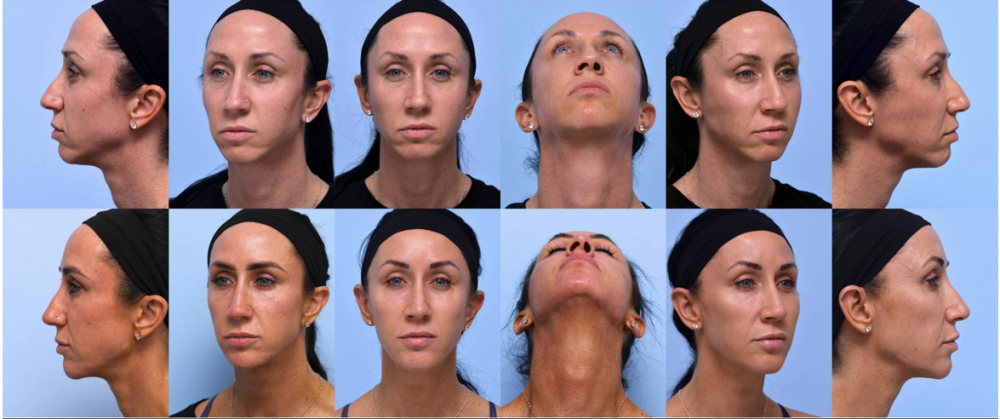
- Two millimeters under the eyes can erase years of fatigue.
- Five to seven millimeters at the chin can balance a profile.
- Refining the cheekbones can lift and slim the entire face.
These aren’t overhauls. They are architectural refinements—precise adjustments that restore symmetry, proportion, and light.


An Architectural Approach to Injectables

At Mabrie Facial Institute, we don’t fill faces, we design them.
Every transformation begins with our Illumination 360° Assessment, which reveals how light, proportion, and structure interact on your face. Then, through our signature approach to injectables, i360 F.A.C.E., we restore balance, definition, and natural light with precision and purpose.
Each treatment is customized, layered, and staged. That’s our “never rushed” promise.
Final Word
The problem with fillers isn’t the product, it’s the approach. Without experience, planning, skill, and restraint, results can look inflated or unnatural. But in the right hands, fillers become one of the most refined instruments of modern facial aesthetics, providing a way to sculpt, illuminate, and rejuvenate the face without surgery.
Ready to see your face in a new light? Discover how Dr. Mabrie uses injectables to redefine what’s possible—without surgery.
Contact us online or call today at (415) 445-9513 to schedule your Illumination 360° Assessment.
I had chin reduction surgery and am unhappy with the result. I’m interested in knowing what my options are.
Thank you for sharing this. We’re sorry to learn you’re feeling unhappy with your chin reduction surgical results. Changes to the chin can significantly affect facial balance and profile, so it’s completely understandable to want clarity about your options.
In some cases, strategically placed dermal filler can help restore proportion if chin reduction surgery has altered projection or contour more than expected. Rather than “adding volume” indiscriminately, the goal is to re-establish structural support and harmony between the chin, lips, and jawline. Small, precise adjustments can sometimes make a meaningful difference in profile balance.
The first step would be a thoughtful evaluation of your current anatomy, surgical changes, and overall Facal proportions. From there, we can determine whether non surgical contouring is appropriate.
If you like, we’re happy to guide you through a consultation so we can assess your concerns in detail and discuss options.