
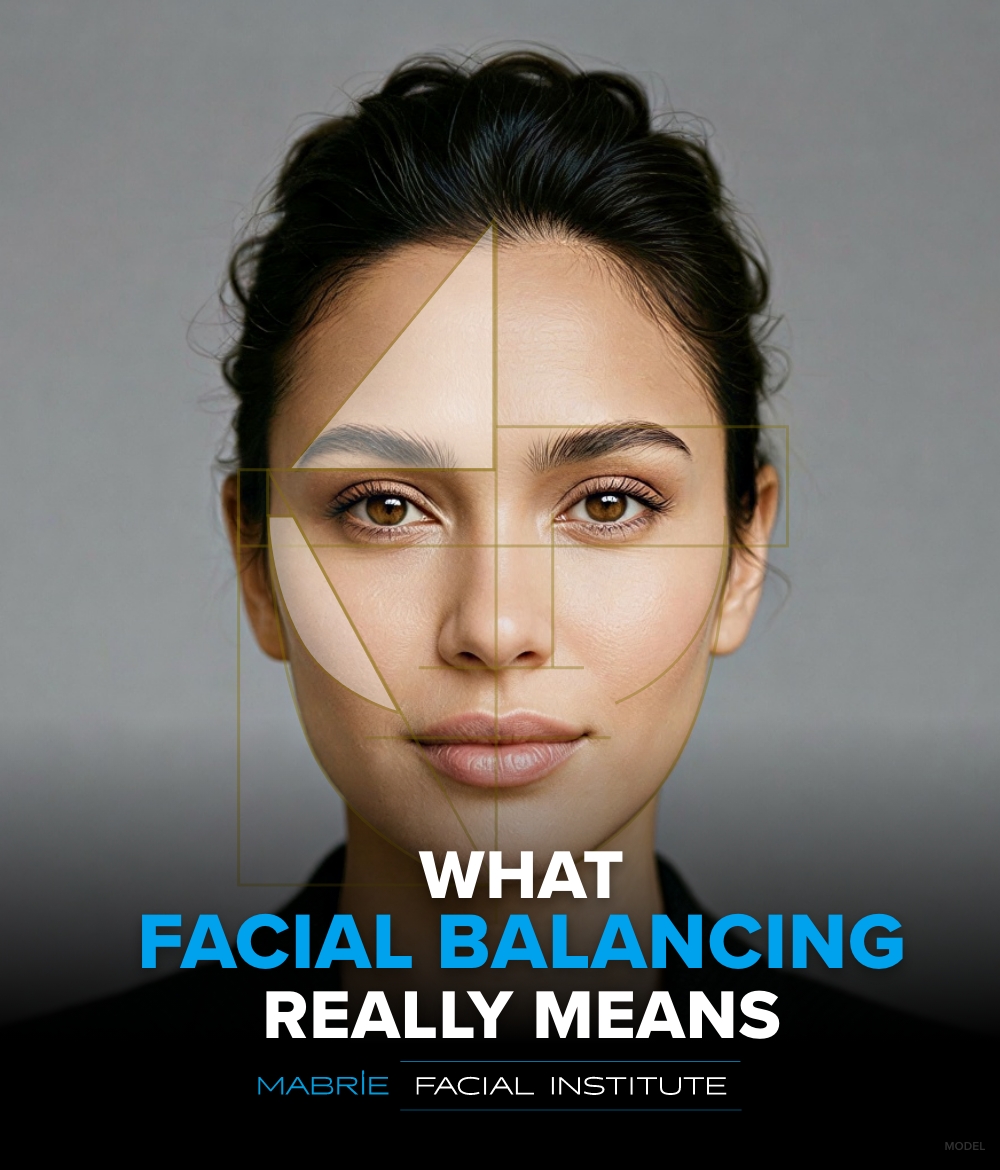
The Symmetry Myth
Most people think facial balancing means making the face perfectly symmetrical. It sounds logical. If both sides match, the face must look better.
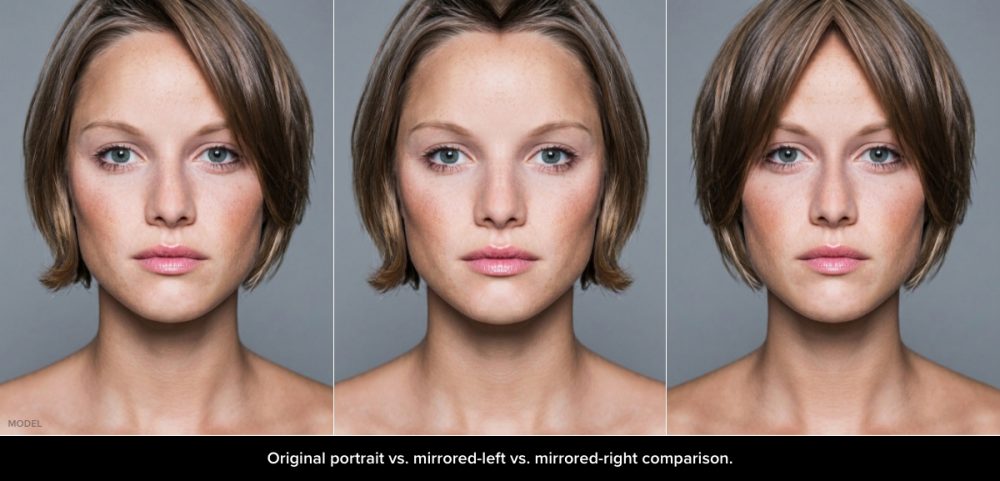
However, while symmetry does play a role in attractiveness, it’s not the ultimate goal. In fact, perfect symmetry can look unnatural. When artists and researchers create mirrored versions of a face—as in Julian Wolkenstein’s portrait series titled “Echoism”—the result often loses its unique character.
Even iconic faces can take on an artificial quality when reduced to mathematical duplication, as you can see in the example below.
So, if it’s not symmetry we’re responding to when we perceive a face as attractive, what is it? The answer is harmony.
What Is Facial Harmony?
Facial harmony refers to the way your features and underlying support work together to create balance, especially in how light and shadow fall across the face. When the facial structure is well-supported, the contours look smooth, and the features feel proportionate from every angle.
When this support shifts over time, the shadows can deepen, and the proportions can feel less aligned.
- Under-eye hollowing can create darker shadowing that makes you look more tired than you feel.
- Reduced cheek support can flatten the midface and change how the under-eye area transitions.
- A chin that sits further back can affect profile balance and lower-face definition.
- Lower-face fullness can soften the jawline and change facial shape.

Facial balancing is about restoring this alignment so your face looks well-rested and balanced.
What Is Facial Balancing?
Facial balancing is the process of evaluating and refining the underlying structure of the face to enhance facial harmony. Rather than focusing on features in isolation, balance comes from studying the relationships between them.
At Mabrie Facial Institute (MFI), our Injectors take a 360-degree approach that considers how:
- The chin aligns with the nose
- The midface supports the under eyes
- The jawline defines the lower third of the face
Using our proprietary Illumination 360° approach, we create facial balance by considering the entire face from multiple angles, paying close attention to proportion, support, and contour.
Facial Proportions
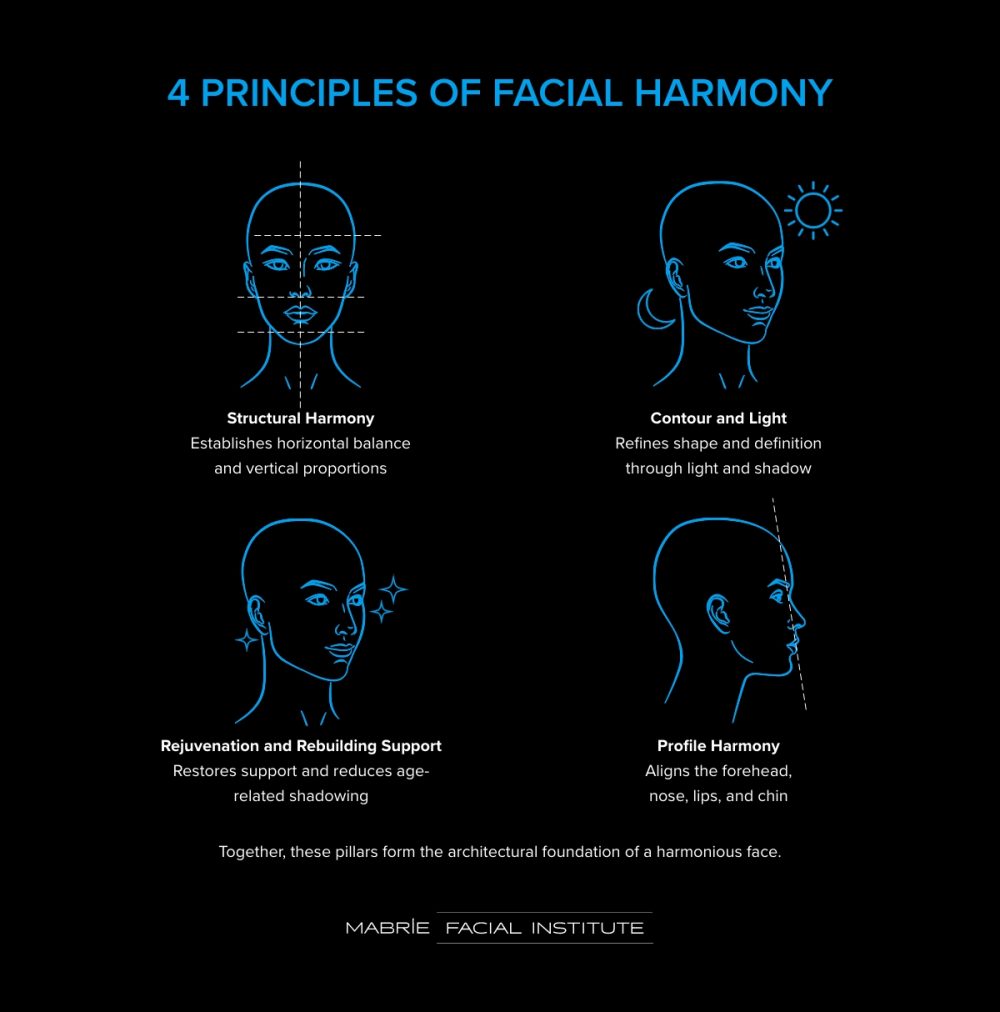
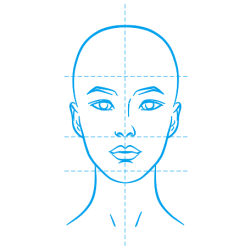
Facial balancing begins with understanding facial proportions, particularly the relationship between the upper, mid, and lower thirds of the face. When these areas are in proportion, the face appears more naturally balanced and harmonious.
When one area, such as the lower third, is out of proportion with the rest of the face, it can subtly affect overall balance and draw attention away from other features. In some cases, a shorter or under-projected chin can make the lower face feel compressed or less defined.
By restoring proportion, we can create a more balanced foundation for the entire face. In this example, lengthening and refining the chin helps bring the lower third into better alignment with the upper and mid-face, improving overall facial balance without altering the patient’s natural look.
Elongating the Face for Proportional Improvement

We used dermal fillers to augment the chin and enhance profile definition, improving both facial symmetry and the vertical proportions of the face. This approach was complemented by BOTOX® to smooth forehead lines, and we treated the under eye hollows to restore midface volume and support.

Contour and Light
Facial contour determines how structure interacts with light. Defined cheekbones reflect light evenly, while a supported jawline creates clean shadow lines. When it comes to facial contouring, we use fillers to add strategic support.
By enhancing contour and projection only where it’s needed, we avoid the trap of overfilling. Instead, we are carefully refining facial structure, so the light accentuates what you want, rather than highlighting what you don’t.
Creating Sculpted Angles With Contour Enhancement

Strategic filler placement added structure and contour to the cheeks, chin, jawline, and nose, while BOTOX was used to slim the face. By enhancing projection and definition in these key areas, we reduced roundness and refined proportions, creating stronger angles and cleaner definition.

Rejuvenation and Rebuilding Support
As support in the midface diminishes, the under-eye transition tends to deepen, and the anterior jawline often softens. Treating isolated lines rarely restores harmony because the underlying support has shifted. By rebuilding structure in the cheeks, chin, and jawline, our Injectors reduce shadow and improve heaviness.
Because aging is primarily structural, our approach is foundational. We use conservative, stepwise changes that build on each other, so the changes feel natural and stable over time.
Refreshing the Whole Face With a Structural Reset

We used fillers and neuromodulators to restore structural support and soften signs of aging. BOTOX improved brow position and softened upper face tension, while fillers restored under-eye support, enhanced cheek architecture, and rejuvenated the lips and lower face.

Profile Harmony
Facial harmony must be evaluated in three dimensions. The relationship between the forehead contour, nose, lips, chin, and jawline determines the overall balance of the face. A recessed chin can exaggerate nasal projection, while a forehead concavity can disrupt the flow of the profile.
Lip volume must also relate proportionally to the chin, just as the jawline needs to anchor the lower face. Profile refinement at MFI is often subtle but meaningful. When the facial structures are aligned, they can dramatically enhance your overall harmony.
Adding Structure To Enhance the Jawline

Fillers were used to improve profile balance by refining the nasal contour, improving lip projection, and strengthening the chin. We complemented this added definition with BOTOX to relax the chin and neck muscles, creating a cleaner, sharper transition to the jawline.
Sharpening Contour for a Stronger Profile

We refined the contour of our patient’s forehead, nose, and lips with filler. Our subtle structural enhancement created a smoother, more proportionate side view while preserving his face’s natural strength and character.
The 360° Perspective: Harmony From Every Angle
True facial harmony cannot be judged from a single angle. It requires careful evaluation of the frontal, three-quarter, and profile views to understand how your features relate to each other and where millimeters can make the most difference.
Our Illumination 360° approach meticulously documents your baseline and the results of each treatment, assessing how light falls across different lighting conditions, and ensuring our Injectors are deeply familiar with your anatomy and case history.
This careful study can mean dissolving previous filler (common when patients come to us from a different practice) or evolving a patient’s treatment plan to encompass the surrounding facial structures. For example, patients may come in wanting to address under-eye shadowing, but rather than limiting treatment to the tear troughs, we find that the best results come from adding midface support.
Seeing Harmony From Every Angle
When facial balancing is performed with a thoughtful, full-face strategy, the improvements are visible across multiple views. Definition is cleaner, proportions are more cohesive, and the face looks naturally rejuvenated. More importantly, your face still looks like yours.
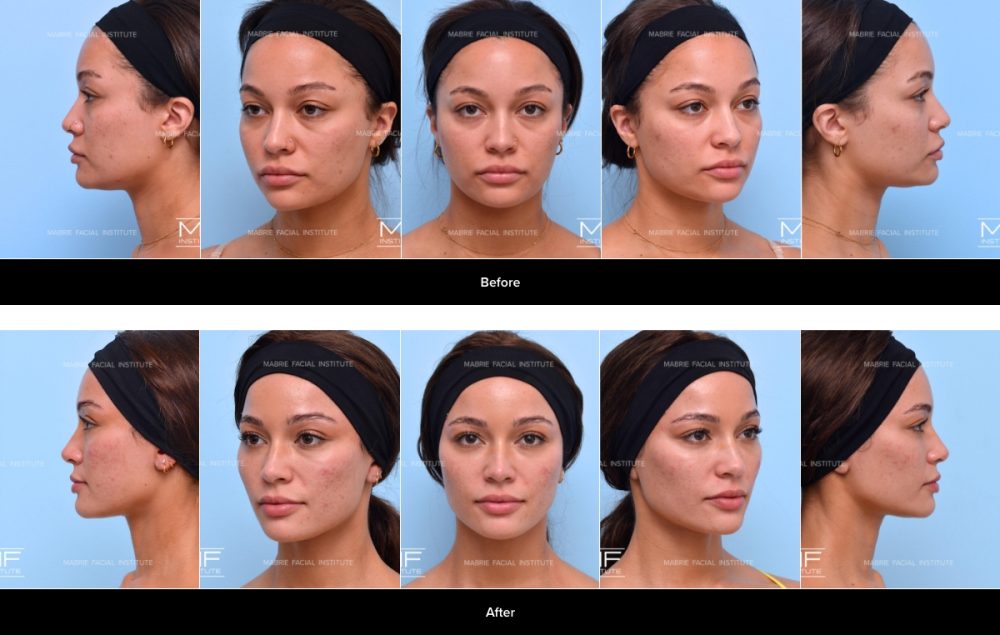
This patient underwent full facial balancing to bring her features into harmony. Subtle structural enhancement to the under eyes, midface, chin, jawline, lips, and nasal profile refined her overall proportions and softened shadowing without changing her natural features.
Harmony, Not Symmetry
Facial symmetry alone does not create beauty. Structural harmony does. When the horizontal balance, vertical proportions, contour, rejuvenation, and profile alignment are evaluated together, the result is not obvious filler. It is architectural clarity.
Ready to unlock your face’s full potential? Request a consultation using the online form or call Mabrie Facial Institute at (415) 445-9513 to get started.
Leave a Reply