
When Filler Misses the Mark

If you’re unhappy with your filler results, it doesn’t necessarily mean you’ve ruined your face. Filler is a powerful tool, but the outcome depends largely on how it’s used. Poor placement, lack of structural planning, or treating isolated areas without considering the full face can lead to results that feel unnatural or imbalanced.
The good news is that in many cases, these results can be safely corrected—and significantly improved.
From Isolated Filler to Full-Face Balance: A Real Patient Case

Many patients don’t notice how their filler is settling until they see themselves in a different light. They may look one way in the bathroom mirror at home, but in photos, on video calls, or under overhead lighting, they can tell that something is off.
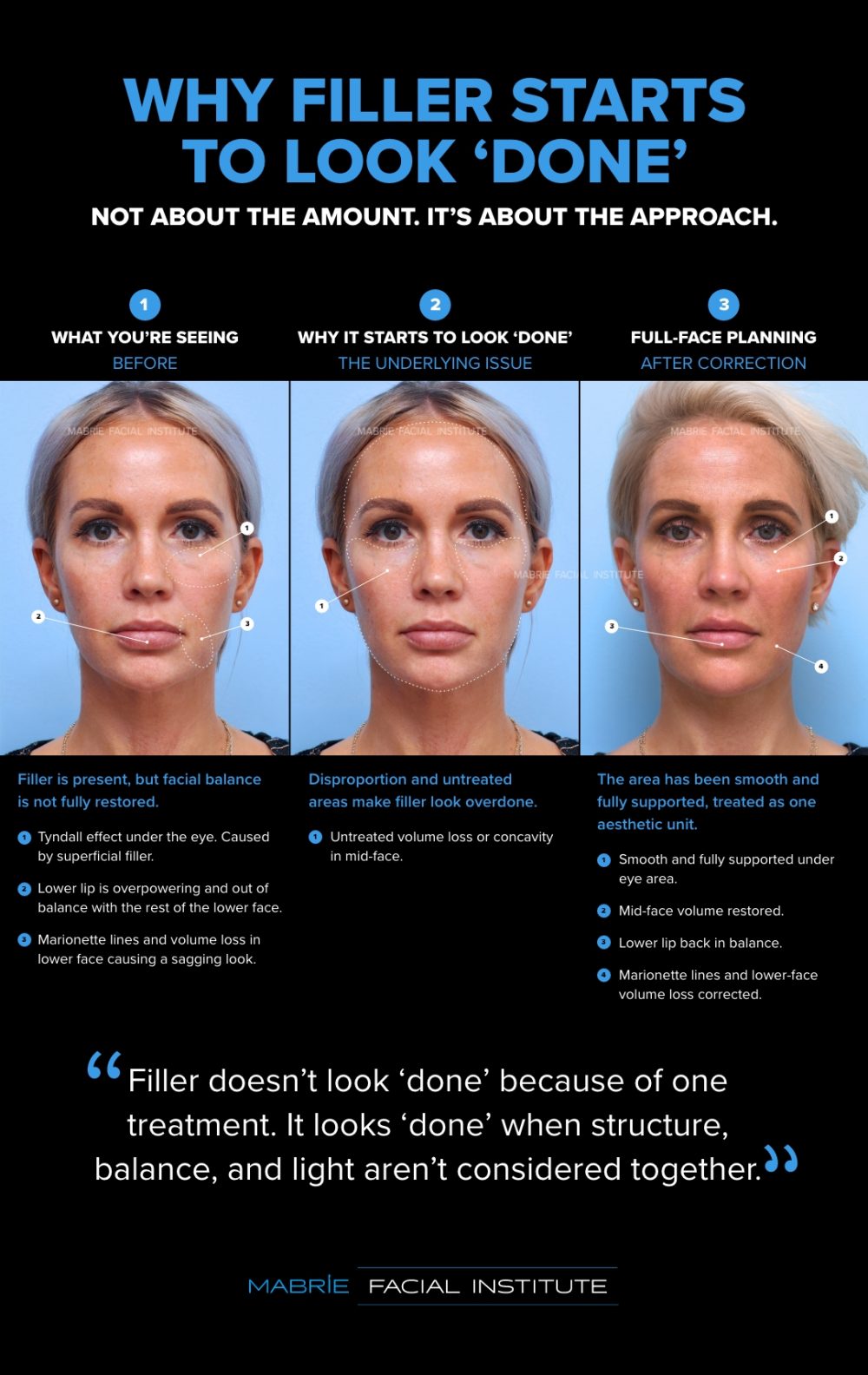
For this patient in her 40s, this “something” looked like:
- A heavy appearance beneath the eyes
- Lips that didn’t feel proportionate to each other
- A loss of facial balance
Rather than adding more filler, we approached her case with a full-face evaluation and correction strategy.
What We Found
Patients typically come to us for filler correction because they feel their filler is “showing.” Our Illumination 360˚® Facial Analysis is how they discover exactly what’s causing their concerns and how Dr. Mabrie can fix them.
In this patient’s case, we identified the main culprits as improper filler placement, overfilling, and a reactive, piecemeal approach to treatment.
Under Eye Area: Visible Filler and Discoloration

Our patient had a bluish tone under her eyes, a phenomenon known as the Tyndall effect. This discoloration occurs when filler is placed too superficially and becomes visible through the skin.
Instead of smoothing the under eye area, the filler created:
- An unwanted blue-gray tinge
- Puffiness
- Uneven light reflection
Lips: Imbalance and Overcorrection

Sometimes, the filler itself isn’t the issue. In this case, it was the balance between the upper and lower lips that was affecting her results.
This overfilling of the lower lip created:
- Disproportion in the mouth and surrounding features
- Visual weight in the lower face
- A less natural-looking side profile
Midface: Lack of Structural Support

Filler that “chases” individual fixes rather than considering the entire face often leads to uneven results, especially when support is missing in an area like the midface.
In addressing the under eyes in isolation, our patient’s earlier treatment had left her cheeks under-supported, which caused:
- The under eyes to appear more hollow
- Shadows to deepen
- The face to look more fatigued overall
Our Approach: Reset, Reassess, Rebuild, Rebalance
Correcting filler works best as a sequence, with each step depending on the one before it. Skip ahead, and you risk undoing the benefit of starting over in the first place.
Reset
We dissolved the misplaced filler in the under eye area and lips. This removed the distortion and allowed us to start from a clean baseline.
For many patients seeking filler correction, this is often the hardest step emotionally, as undoing something before rebuilding it can feel like a step backward—even when it’s the right move forward.
Reassess
Once we removed the old and misplaced filler, we evaluated our patient’s facial anatomy:
- Natural facial structure
- Facial proportions and symmetry
- Areas that truly needed support
This step is essential to achieving natural-looking results. Once we had an accurate view of her true anatomy, we could design her custom treatment plan.
Rebuild
We strategically restored volume in the midface by:
- Improving the transition between the cheeks and the under eyes
- Placing filler at the correct depth and location
- Improving contour and light reflection
The goal was not just to “add volume” but to restore structure and support where it was needed most.
Rebalance
Finally, we refined her lips and lower face by:
- Restoring a more natural upper-to-lower lip ratio
- Improving the harmony between her features
In many cases, small adjustments often make the biggest difference.
The Result: Natural, Not Noticeable
The goal wasn’t a dramatic change but one that put the focus back where it should be: on our patient’s natural beauty rather than the filler.
Following her i360 Full Face treatment, our patient now has:
- Better structural support
- More proportionate features
- A refreshed and subtly refined appearance
“You should see the result—not the filler.”
What This Means for You
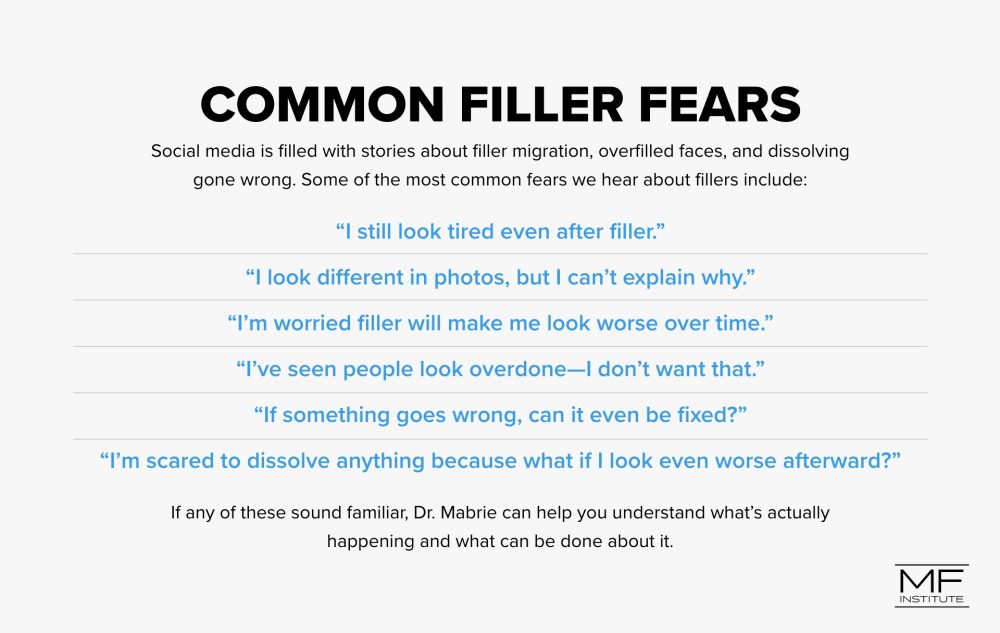
If you’ve had filler before and feel uncertain about the results, or if you’ve avoided it altogether because of what you’ve seen online, we get it.
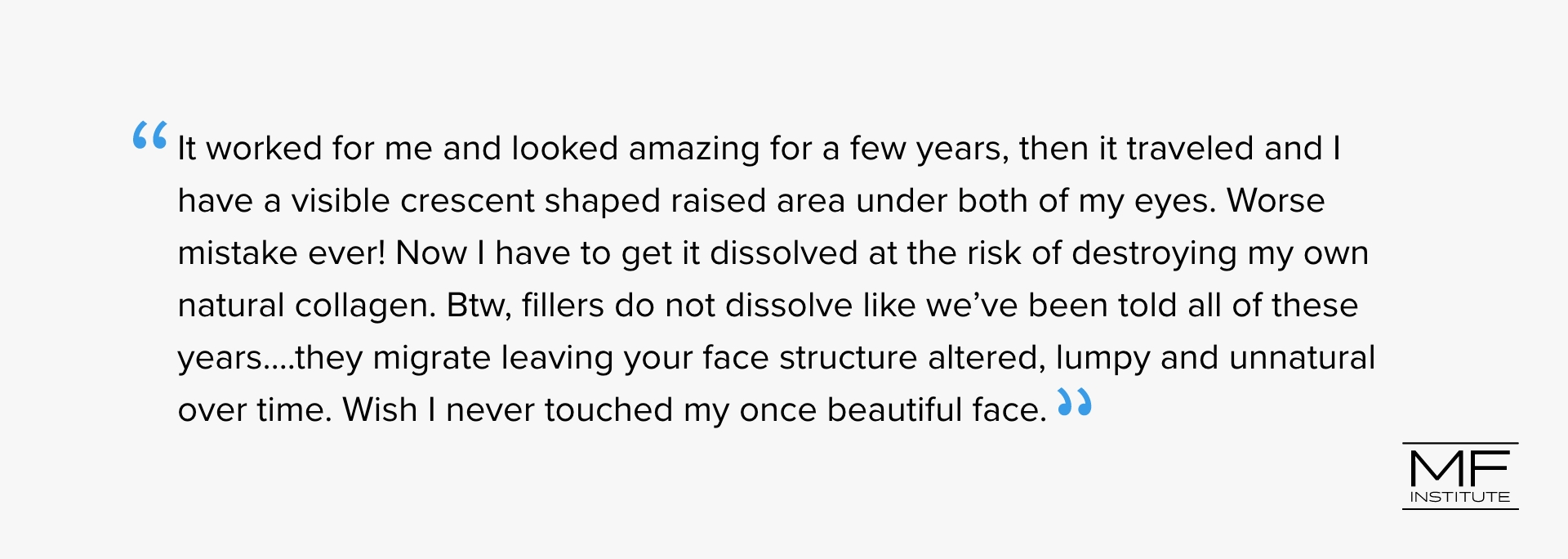
It’s not uncommon to come across comments like the one below and not know how to separate the fact from the fiction.
The good news is:
- Filler itself is not inherently the problem
- The approach and expertise behind it matter most
With the right strategy:
- Your results can stay natural and consistent, even with long-term use
- Imbalance can often be corrected
- You can look rejuvenated without looking like you had filler
Common Questions About Correcting Filler
The Basics
Can filler be dissolved safely?
Yes. Hyaluronic acid fillers can be dissolved with hyaluronidase (Hylenex®) when performed by an experienced injector.
Is dissolving filler predicatable?
Outcomes can vary depending on the type of filler, its placement, how much is present, and how long it’s been there. In skilled hands, dissolving filler is typically very effective, but it still requires precision and clinical judgment.
Is filler dissolving considered off-label?
Yes, but that doesn’t make it any less safe. “Off-label” simply means the medication is being used outside its original FDA-approved indication, which is common in many areas of medicine. Hyaluronidase is frequently used in the aesthetics industry to dissolve hyaluronic acid filler.
Planning Your Treatment
What if the filler doesn’t fully dissolved?
Some older, denser, or long-standing fillers may need more than one dissolving session to fully break down. If some filler remains after treatment, Dr. Mabrie can reassess and determine whether additional dissolving, a different approach, or simply leaving the remainder in place is the best path forward.
Can you dissolve only part of the filler?
In some cases, yes. Dr. Mabrie may selectively dissolve filler in a specific area while leaving the rest untouched. Because hyaluronidase naturally spreads within the tissue, some cases call for a broader correction approach instead, which often produces a more predictable, balanced result.
Do I need ultrasound before dissolving filler?
Not always. Ultrasound can be helpful in certain complex or long-term filler cases, especially when the location or type of filler is unclear. However, not every patient requires ultrasound-guided dissolving. The decision depends on your anatomy, filler history, and treatment goals.
What To Expect
Will I look worse after dissolving filler?
You may look temporarily different after treatment. Swelling or redness is common right after filler is dissolved, but it typically resolves quickly. A proper evaluation helps determine what to expect before treatment begins.
Can dissolving affect your body’s collagen or natural hyaluronic acid?
Hyaluronidase is designed to break down hyaluronic acid, not collagen. While it doesn’t damage or destroy your body’s collagen, it can temporarily affect your own naturally occurring hyaluronic acid in the treated area, which is why conservative dosing and precise, targeted placement matter. Your body naturally replenishes hyaluronic acid over time, and every treatment plan is based on your specific anatomy, filler history, and goals.
What is “post-hyaluronidase syndrome?
The term “post-hyaluronidase syndrome” has recently gained attention online and refers to reports of hollowing, softness, or other tissue changes after dissolving filler. In many cases, these changes were already present before treatment; long-standing filler, in particular, can gradually stretch the surrounding tissue, so when it’s removed, the laxity becomes more visible.
Other contributing factors include underlying aging or volume loss that had simply been masked by the filler over time. This is why proper diagnosis and conservative treatment planning are so important before dissolving filler.
Can you have an allergic reaction to filler dissolver?
Although uncommon, allergic reactions to hyaluronidase can occur. Patients with certain allergies, including bee or wasp sting allergies, may require additional discussion and evaluation beforehand. This is one reason dissolving filler should always be performed in a medical setting with experienced providers.
Can dissolving filler cause nerve pain or prolonged inflammation?
Temporary swelling, tenderness, or inflammation can happen after dissolving filler. Persistent nerve-related symptoms are considered uncommon, but any medical procedure carries risk. Careful assessment, precise technique, knowledge of facial anatomy, and appropriate follow-up are important parts of safe treatment planning.
Final Thoughts
Good filler work starts with structure, not volume. When placement, planning, and expertise come together, the result shouldn’t look obvious. It should simply look like you at your best.
If your previous filler no longer looks or feels right, we’re here to help. Our i360 Correct treatment is designed to help patients dissolve unwanted filler and rebuild a more balanced, natural-looking result.
To explore whether dissolving filler is right for you, request a consultation or call Mabrie Facial Institute at (415) 445-9513 to get started.
Leave a Reply