

Understanding Filler Safety
Dermal filler injections are generally very safe when performed by a skilled, experienced injector with a thorough understanding of facial anatomy. Like any medical procedure, they carry potential risks, particularly in anatomically complex areas such as the under eyes and nose, which demand specialized knowledge and precise technique.
For expert injectors, safety starts with understanding the face in 3 dimensions, respecting each patient’s unique anatomy, and carefully adapting every treatment plan, technique, and product choice accordingly.
This thoughtful, individualized approach helps create natural-looking results while prioritizing patient safety at every step.
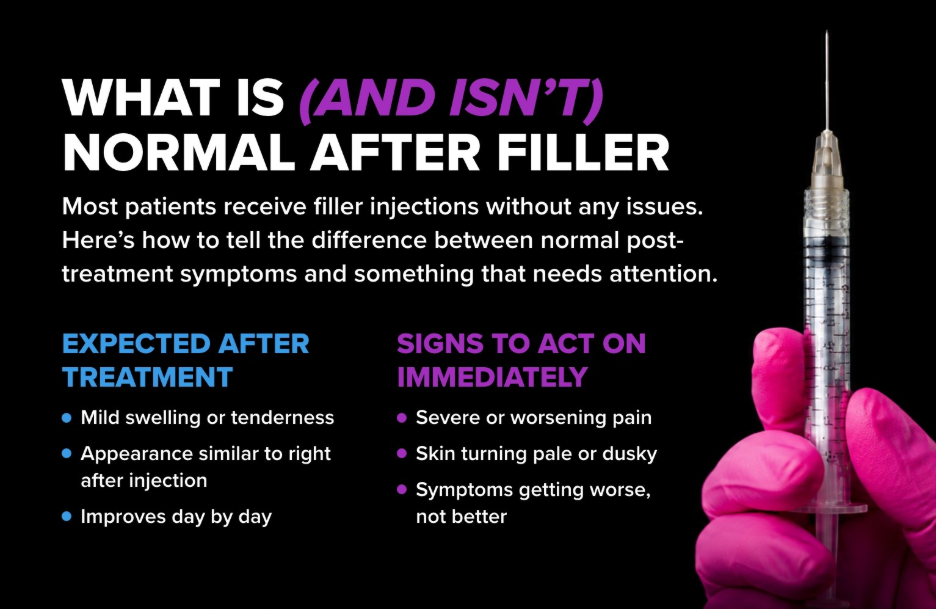
Which Areas of the Face Are the Most Complicated To Treat?
The under eyes and nose are among the most technically demanding areas to treat with filler. Rather than avoiding these areas, experienced injectors rely on a detailed understanding of the different layers of the face, including the network of arteries beneath the surface, to place filler at the correct depth.
Under the Eyes: A Higher Risk for Poor Aesthetic Results
The under eyes have complicated anatomy to navigate, from the delicate skin to the thin layer of fat that offers little cushioning over the arteries beneath it. A highly trained specialist who takes a surgical approach to injectables is comfortable working within this compact space. Filler must be meticulously placed to avoid overfilling and positioned in the correct tissue plane to avoid an unsatisfactory result.
Complications from under eye filler treatment can include:
- A puffy or lumpy appearance
- A bluish tint to the skin, known as the Tyndall effect
- Under eye bags and shadowing that look worse after treatment
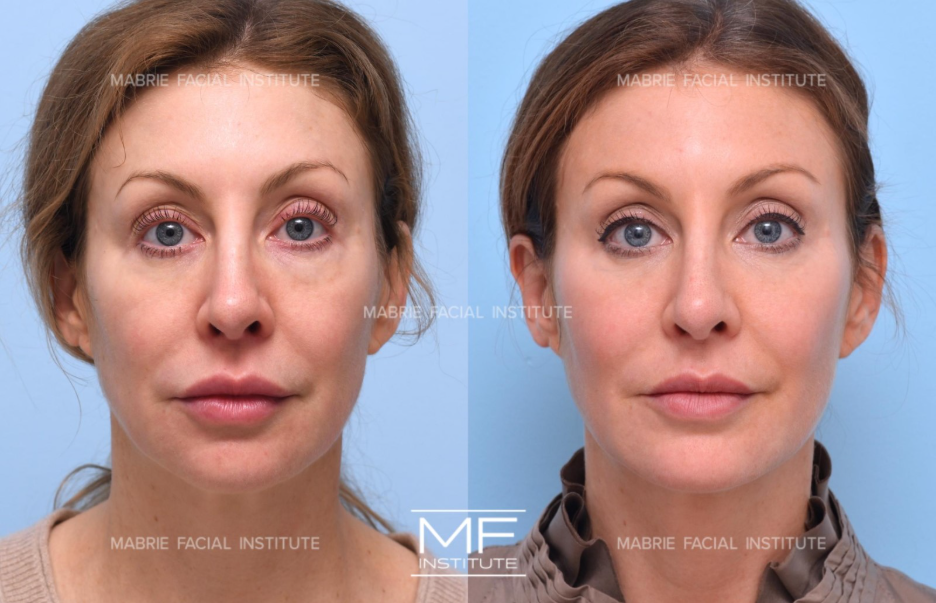
Following filler at a different practice, this patient noticed puffiness and slight discoloration beneath her eyes. We performed a corrective treatment: first dissolving the existing filler and then carefully rebuilding the area for a smoother, brighter result.
Fortunately, poor filler results can be reversed with an injectable substance called hyaluronidase (Hylenex®). This enzyme dissolves hyaluronic acid fillers when complications arise, such as delayed swelling that doesn’t resolve on its own, or when a reset is needed to address overfilling or another cosmetic concern.
We can use hyaluronidase to reverse your results at any time—even years after the filler was first placed. Not all of the filler needs to be removed, but it may take multiple sessions to achieve your desired results.
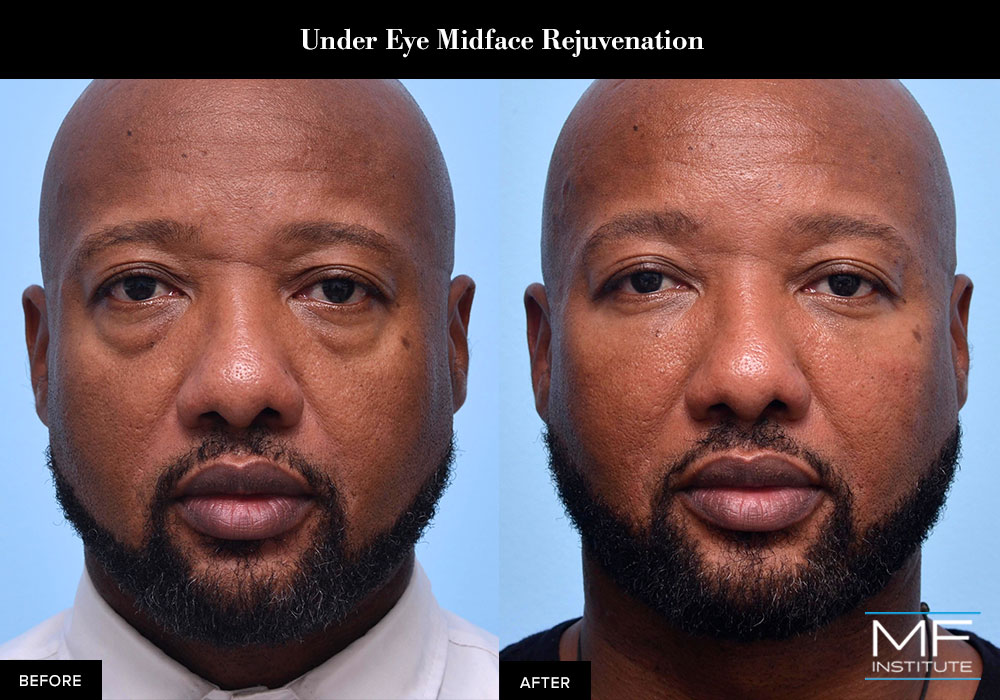
This patient’s after photo is an excellent example of what under eye filler should be: so natural as to be virtually undetectable. Our patient’s bags and shadows have disappeared, and his cheekbones now have the definition they need to support the under eye area.

Non Surgical Rhinoplasty: A Higher Risk for Medical Complications
Non surgical rhinoplasty requires careful consideration of both aesthetics and anatomy. Treatment can affect perceptions of personal and cultural identity, while the nose’s complex vascular anatomy carries a higher level of risk to patient safety.
Filler that is accidentally injected into an artery, such as the angular artery near the nose, can reduce or block the flow of blood, leading to an uncommon but serious potential complication known as vascular occlusion.
This condition is similar to a blood clot and, if not treated immediately, can cause the skin and other tissues that rely on the artery’s blood supply to die.
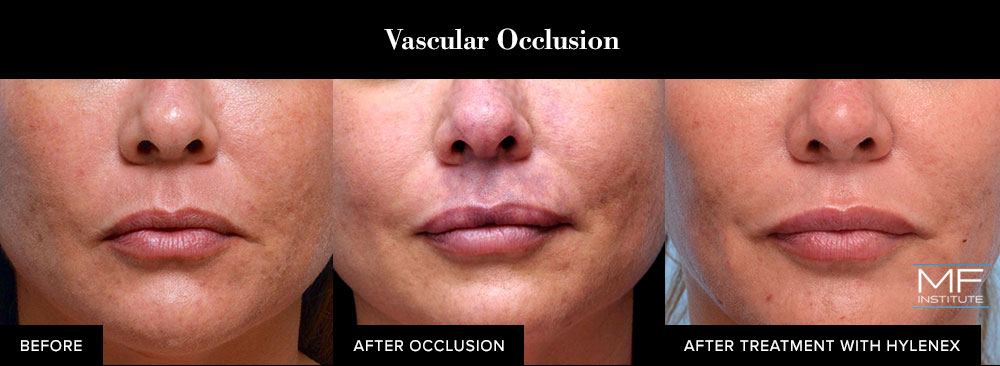
Once the affected area is treated with hyaluronidase and the misplaced filler is dissolved, the area returns safely to its baseline.
Immediate injection of hyaluronidase is the primary treatment for vascular occlusion. An experienced injector will always have hyaluronidase on hand when performing filler procedures in the unlikely event of a complication.
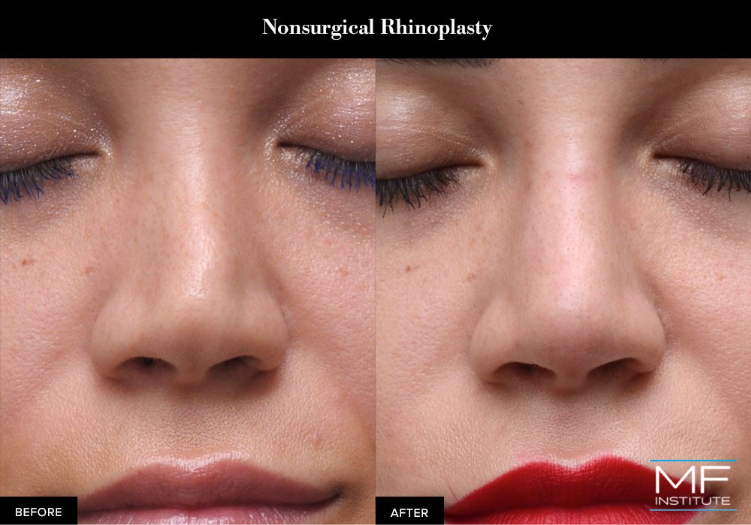
Unsatisfied with the results of her previous rhinoplasties, this patient came to us for a non surgical approach. We straightened her nasal bridge, filled in the concavities, and gave her a more defined nasal tip.
Frequently Asked Questions
How do I know if my injector is experienced?
An experienced injector offers so much more than technical skill. They bring a deep understanding of facial anatomy, sound clinical judgment, and a thoughtful approach to treatment. Look for a provider who performs injectable treatments regularly, has extensive experience treating the face, and can demonstrate consistent, natural-looking results through a gallery of real patient before and after photos.
A comprehensive facial assessment is another hallmark of an experienced injector. They should take time to evaluate your face in detail, discuss your goals, explain the benefits and risks of treatment, and develop an individualized treatment plan. They should also be prepared to recognize and manage potential complications and know when a more conservative approach (or even no treatment at all) is in your best interest.
Ultimately, experience isn’t measured by how much filler an injector uses but by their ability to achieve balanced, natural-looking results without compromising safety.
Does using a cannula make filler injections safer than a needle?
Neither a needle nor a cannula is inherently safer in every situation. The most important factors are the injector’s anatomical knowledge, technique, and ability to match the appropriate filler to each area of the face.
How can I reduce my risk of filler complications?
Beyond the choice of injector, the best way to reduce your risk of complications is to follow your provider’s aftercare instructions and contact them promptly if you experience any unusual pain, significant skin discoloration, or other unexpected symptoms after treatment.
While no medical procedure is entirely without risk, choosing a qualified injector and maintaining open communication before, during, and after your filler treatment can help you maximize both your safety and results.
What is vascular occlusion, and how common is it?
A vascular occlusion is an uncommon but serious complication that can occur if dermal filler blocks or significantly reduces blood flow within a blood vessel, whether due to direct injection or the filler externally compressing the vessel.
Without prompt recognition and treatment, it can lead to tissue damage and, in extremely rare cases, vision loss. Fortunately, vascular occlusions are uncommon, and skilled injectors are trained to recognize the early warning signs and begin treatment immediately if one occurs.
While the possibility of vascular occlusion can sound alarming, the overall risk remains very low. Prompt diagnosis and treatment are essential to achieving the best possible outcome should this complication occur.
We’d Love To See You
Dermal fillers are safe, effective, and widely used for good reason. The areas that carry the most risk—the under eyes and nose—aren’t reasons to avoid treatment. They’re reasons to choose an injector who understands your anatomy well enough to navigate it with precision.
Request a consultation or call Mabrie Facial Institute at (415) 445-9513 to explore what dermal filler can do for you.
Leave a Reply